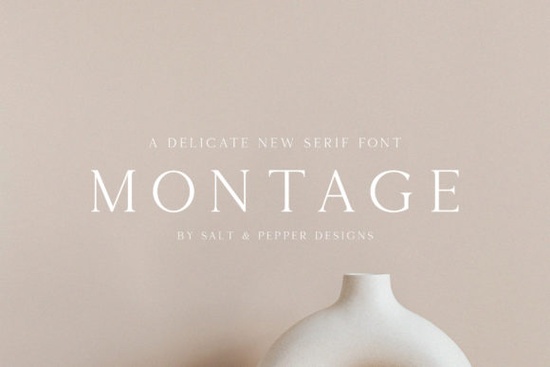
If you're looking for a refined serif font that feels both timeless and quietly luxurious, Montage Font is worth your attention. It’s not overly ornate or dramatic just clean, thin-stroked, and authentically lettered, with subtle serifs that lend quiet authority to any layout. Whether you’re designing wedding stationery, boutique packaging, minimalist social posts, or small-batch print-on-demand products, Montage adds a touch of understated elegance without competing with your imagery or message.
What kind of projects does Montage work best for?
Because it’s thin and highly legible at medium sizes, Montage shines in contexts where clarity and calm sophistication matter most. Think engraved-style business cards, delicate product labels for skincare or candle brands, subtle headers on craft fair banners, or even hand-lettered-style digital invites. It pairs especially well with soft textures linen backgrounds, muted watercolor washes, or neutral paper stocks. Unlike bolder serifs, it doesn’t dominate; instead, it supports your content while quietly reinforcing a premium feel.
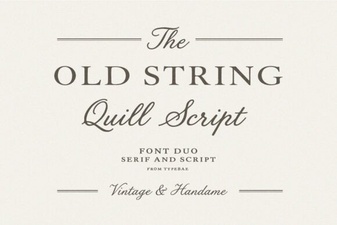
You’ll find it fits naturally alongside other thoughtful serif fonts like the warm, mechanical charm of a retro typewriter-inspired serif, or the gentle, hand-drawn irregularity of an old string font. Each brings something different: Montage offers restraint, while those others lean into texture or nostalgia. Used thoughtfully together say, Montage for body text and a retro typewriter font for a headline you get contrast that feels intentional, not cluttered.
How does Montage compare to other serif fonts on Creative Fabrica?
Not all serifs are built for the same job. Some are high-contrast and dramatic (great for logos), others are rounded and friendly (ideal for kids’ products), and some like Montage are designed for quiet impact. Its letterforms are carefully spaced, with open counters and consistent thin weight, making it easy to read even in smaller print sizes something that matters when you’re ordering custom foil-stamped tags or tiny jar labels.
It’s also versatile across formats. You can use it confidently in Canva, Adobe Illustrator, Cricut Design Space, or Silhouette Studio. Since it includes standard OpenType features (like ligatures and alternate characters), you can add subtle polish without extra design work just type normally and let the font do its thing.
If you're exploring serif options more broadly, you might also like the Montage font, the retro typewriter font, or the old string font. Each has its own voice and Montage’s is the one that says “carefully considered” rather than “loudly decorative.”
Who tends to use Montage and why?
Small business owners who sell handmade goods often choose Montage for packaging because it reads as trustworthy and unhurried qualities customers associate with quality craftsmanship. Print-on-demand sellers use it for apparel tags, greeting cards, and wall art prints where subtlety stands out in a crowded marketplace. Designers working with lifestyle or wellness brands appreciate how easily it adapts to serene, earth-toned palettes. Even hobbyists creating family recipe books or memory journals find it approachable not too formal, but never casual.
One practical note: Montage works best when given room to breathe. Avoid cramming it into tight columns or pairing it with overly busy background patterns. A simple sans-serif (like Lato or Poppins) makes a reliable companion for captions or secondary text keeping hierarchy clear without visual competition.
Getting started with Montage
Once downloaded, install it like any desktop font (double-click → “Install”). Then test it in a real context not just a mockup, but something you’d actually send to print or share online. Try these quick checks:
- Does it stay readable at 10–12 pt in your intended format (e.g., printed label, Instagram caption)?
- Does it hold up when exported as a PDF or PNG? (Some thin fonts can pixelate if not embedded properly.)
- Does it pair well with your brand’s primary color and existing type choices?
- Are you using it where it adds value not just because it looks nice, but because it supports your message or audience’s expectations?
If you’re still deciding, try sketching two versions of the same layout: one with Montage, one with a default system font. The difference isn’t always about “better” it’s about whether the tone matches what you’re trying to say. That’s where this font earns its place: not as a flashy accent, but as a quiet, confident choice.
Explore Design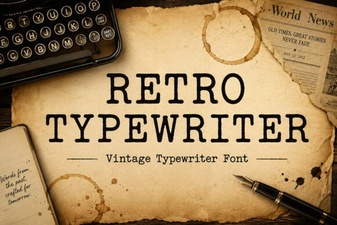 Stylish Vintage Fonts for Modern Design Projects
 Classic String Fonts for Modern Design Projects
 Design a Butterfly Monogram Font for Crafts
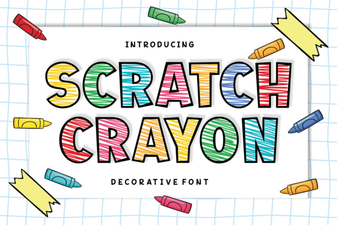 Crafting with the Scratch Crayon Font
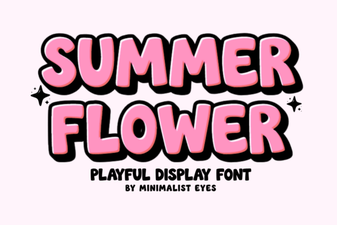 Blooming Fonts for Your Summer Design Projects
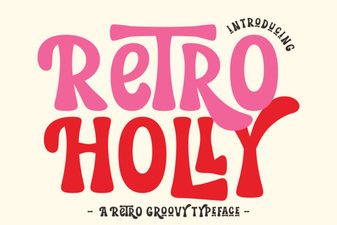 Retro Holly Font for Festive Creative Designs